Sealing a Backyard Patio or Pool Deck Around Clay and Syracuse
Sealer is what stands between your concrete and a Central New York winter, so it is worth choosing well.
October 16, 2026 · 4 min read
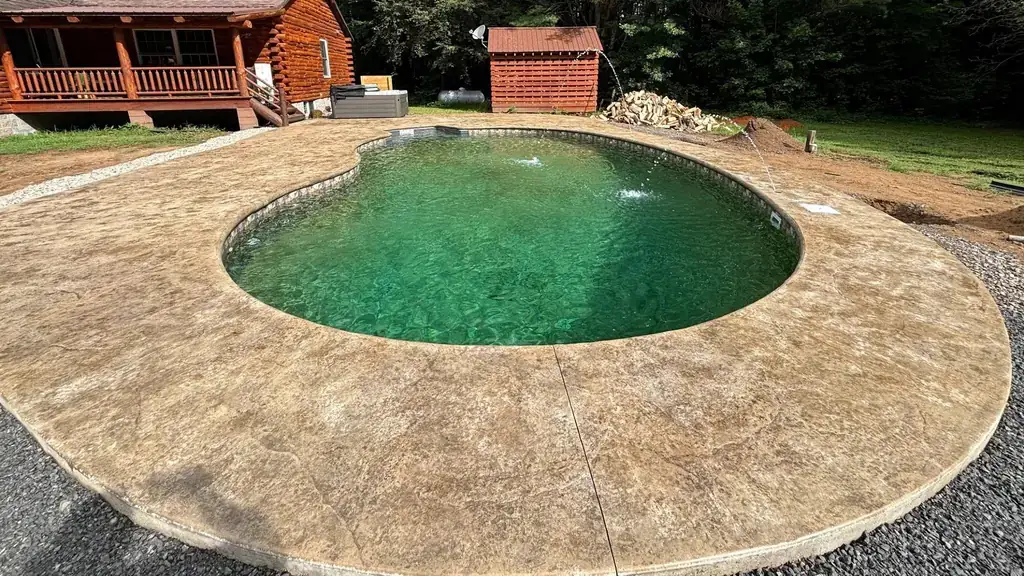
Walk any backyard near Clay or Syracuse in March and you can usually tell which concrete was sealed and which was left alone. The sealed patios have kept their colour and shed water, while the bare ones look thirsty, stained or flaking at the surface. Sealing is the least dramatic part of owning a stamped patio or a pool deck, and it is the part that does the most quiet work. This guide covers the main sealer types, how long they last, what a reseal can do for tired colour, and a few habits that protect the finish.
Why concrete needs sealer in this climate
Concrete is porous. Left bare, it drinks in water, and in Central New York that water freezes and thaws many times each winter. Add UV from summer sun, moisture from lawn sprinklers or a pool, and de-icing salts tracked in from the driveway, and you have everything that wears a surface down. A good sealer slows all of that. Our stamped concrete is sealed against freeze-thaw, moisture, UV and de-icing salts, and we bring more than 20 years of concrete sealing experience to resealing work on patios, pool decks, walkways and driveways.
Acrylic, urethane or siloxane?
We work with three families of sealer: acrylic, urethane and siloxane. The details vary by product, so treat the following as general trade guidance and ask your installer which specific product goes on your slab.
- Acrylic sealers are a common choice for stamped concrete. They sit on the surface as a film and tend to bring out colour, and they are generally the easier type to renew.
- Urethane sealers also form a film, usually a tougher one, and are often chosen where the surface sees heavier wear.
- Siloxane sealers soak into the concrete rather than coating it, which usually means a more natural look with less sheen.
No one type is right for every yard. A shaded patio under maple trees, a sun-baked pool deck and a driveway that meets a plow blade all ask different things of a sealer. That is part of why we like to see the slab in person before recommending a product.
How long does sealer last?
The sealers we use range from products rated at about 3 to 5 years up to premium options that can last up to 10 years. A longer-lasting product costs more up front, so the honest question is how long you expect to own the home and how much you want to think about this chore. Real-world life depends on sun exposure, foot traffic, snow removal habits and how well the surface was prepared before sealing. A sealer applied over a dirty or damp slab will not bond the way it should, which is another reason to hire someone who treats prep as part of the job.
Resealing can refresh the colour
Here is a piece of good news for owners of older stamped concrete. When we reseal, we can recolour the surface as well. Stamped patios fade with sun and age, and sometimes the original colour is simply not the colour you want ten years on. A reseal with colour can warm up a washed-out patio or change the mood of an entire backyard without tearing anything out. That is one reason resealing is worth considering before you assume a faded slab needs replacing.
The reseal schedule we recommend
For new concrete, reseal after the first winter. After that, plan on resealing about every three years, depending on how much sun and traffic the surface gets. If you can see water soaking in and darkening the concrete instead of beading, or if the surface looks dull and chalky, it is probably time. Do not wait for visible damage. Resealing early is simpler than repairing a surface that has already been worn through.
Anti-skid additive for pool decks and steps
Sealed concrete can be slippery when wet, and that matters around a pool, on steps and anywhere kids run barefoot. We recommend an anti-skid additive on reseals. It is added to the sealer so the finish has a little grip, without turning the surface into sandpaper. Mention the pool, the steps or any slope when you ask for an estimate so the right additive goes into the plan.
A few small habits also protect the finish between reseals.
- Use plastic caps or pads under furniture legs, and lift rather than drag.
- Avoid metal furniture that can rust and stain, and avoid rubber-backed mats and planters that trap water and can discolour the sealer.
- Skip ice melt. Use sand for traction, calcium chloride only if you must, and a plastic shovel.
These are small habits, but they add up over the life of the sealer, and they cost nothing.
Not sure whether your patio is due? We offer free on-site estimates around Clay, Syracuse and the rest of Central New York. Call (315) 676-0005 or book online and we will take a look at the surface with you.
Distinctive Stone & Concrete, (315) 676-0005
Call (315) 676-0005More articles
Stamped Concrete Installation in Syracuse: What to Expect From Estimate to Cure
A stamped patio looks like stone or brick, but the slab underneath decides how it looks after ten winters.
Why Concrete Works for Outdoor Spaces in Central New York
Freeze-thaw cycles, plow blades and road salt are the real test for any outdoor surface in this region.